
[Sticky] About the role 'convictions' play in human intelligence, starting from the practical situations 'advisors' — such as IT advisors — find themselves in. Advisors need (a) to know what they are talking about and (b) be able to convince others. For architects, the first part is called 'architecture' and the second part could be called 'the psychology of architecture'. Our intelligence — and that of our audience — is mostly 'mental automation', which makes us humans fast and energy efficient, but only 'quick and dirty'. And like all automation: change is hard.
Category: Management and Organisation
Let’s bury NIST’s outdated definition of Cloud Computing

The NIST definition of Cloud Computing from 2011 has now become so much an oversimplification that it is more often than not unhelpful, e.g. when trying to base your policies on it. So, forget about 'IAAS' and 'PAAS', end your 'cloud policies' or cloud-specific procedures. Instead, concentrate on managing the key generic issue underlying it: the ever more complex mixes of owned and outsourced algorithms and data..
Will McKinsey be the first ‘big consultancy’ that gets (enterprise) architecture right?

McKinsey seems to be the first 'big consultancy' that really frees itself from outdated, ineffective, orthodox enterprise architecture notions.
Dev, Test, Production — “It’s Turtles All The Way Down”
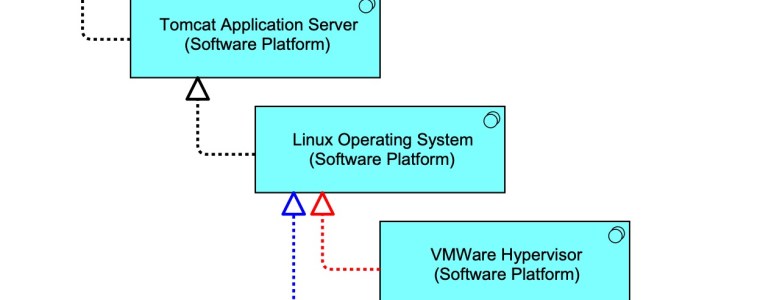
Most IT exists to support other IT, not your business directly. A part of this is that stack/web of platforms on which your applications depend. How does that for instance affect #informationsecurity in your designs?
Amateurs talk Strategy, Professionals talk Logistics — that is kind of true in IT as well

It is an old adagium of warfare: Amateurs talk Strategy, Professionals talk Logistics. Maybe surprisingly, this is true in IT as well. Maybe it is true in any complex and unpredictable situation, which 'big IT' is more and more turning out to be. Logistics considers Strategy a small snack.
Wanted: IT advisor. No real IT insight required.

IT is one of the few fields where it is generally considered you do not need to understand it to make decisions about it.For good IT advisors, the kind that actually understand what they are advising about, the phrase 'we need an IT advisor who above all understands the business' is a warning sign that can easily mean an environment where being an IT advisor is like being a farmer sowing seeds on hard rock.
For the Board: Essential Reading on IT Strategy

IT is notoriously hard to manage and it has been so for decades. As a result, the execution of new strategies is often exceedingly difficult. These 4 articles (2 serious, 2 a bit tongue-in-cheek) are meant to enlighten non-IT-savvy board members.
Should you derive your IT Strategy from your Business Strategy? Probably not too much.

It is generally accepted that IT Strategy must follow Business Strategy. It seems a no-brainer. But is it? There are reasons to look at it differently, reasons that become more pressing as organisations become more digital.
From Dark Scrum to Broken SAFe — some real problems of Agile-at-scale. And a way out.

There is a massive movement of organisations moving to agile-at-scale (e.g. SAFe). Ironically, it can turn into an organisation becoming one big 'project', the opposite of what agile wants to achieve.
Don’t become an Enterprise/IT Architect…

With increasing IT volumes in the world, landscape change is getting harder and harder, and we need to adapt to that fact. Upper management is very slow to adapt and the Enterprise/IT Architect/Strategist's position becomes more frustrating as a result.
 R&A IT Strategy & Architecture